The article that we were tasked with reading for homework was, yes, about a woman who was always falling without outside stimuli, but more importantly about the findings of Paul Bach-y-Rita in succeeding to treat the patient in an era when this was believed to be impossible. Cheryl, the patient who suffered from the lack of function in her vestibular apparatus that controls balance within the body, was able to undergo a nearly complete rehabilitation in her vestibular sense thanks to the "training" from Bach-y-Rita's innovative machine that taught her brain's healthy tissue to take on the job of vestibular function. This breakthrough essentially disproved the widely popular localization theory of neurology and assisted in Bach-y-Rita's goal of employing the brain's natural plasticity to rehabilitate and treat patients of all kinds of their afflictions.
Up until his pioneering idea about plasticity in the brain became solidified in scientific theory, the explanation for how the brain worked had long been established as "localization", or the idea that a brain has specific parts that have specific functions to help us control our body as a whole, which perpetuated the belief that once a part of the brain was in dysfunction or even missing it could never be replaced, and the patient would be a lost case. Bach-y-Rita was determined to reevaluate the way neurologists and scientists handled the rehabilitation of patients with various dysfunctions of the brained thus conducted one of many tests with the intent of assisting those who were a "lost cause" due to the impact of the localization theory.
One quote that I found to be informational and interesting was that "to decode theses skin sensations and turn them into pictures...the brain has to learn something new, and the part of the brain devoted to processing touch has to adapt to the new signals". The author was talking about how the type of receptor used by the blind(in this case, their touch with a cane) does not matter as much as the way that the brain responds and uses those signals to assist itself. I found this interesting because I had always wondered how canes help the legally blind "see", and Paul Bach-y-Rita was able to support how instead of memorizing the array of things in a room, they are able to orient themselves by teaching their brain to read the signals of touch for vision.
Another quote that really hit home for me was when Doidge mentions, "[Bach-y-Rita] began to conceive of much of the brain as "polysensory"--that its sensory areas were able to process signals from more than one sense". This was really cool to me because I did know how taste and smell were related to each other, but the idea that senses such as sight and hearing could also be associated was really novel.
Finally, the ending sentence of this reading that concludes,"[Nature] has given us a brain that survives in a changing world by changing itself". This quote really resounded with me because of how nicely it summarized the entire idea of this reading, which is how the brain can adapt to fit different conditions in people who have various changes in the makeup of their brain and the effectiveness of its parts. The brain is able to exchange functions between parts if needed, as also seen in the "Woman With a Hole in Her Brain" reading that we had read previously.
Sunday, February 12, 2017

Thursday, February 9, 2017
The Clay Brain
In class, we made a models of the brain with Play-Doh, and then labeled them to represent different parts of the brain. This was made on a piece of cardboard, and the end result was a colorfully labeled brain(seen from both the left hemisphere along the sagittal plane and the right cerebral hemisphere) that we could use to help us remember the different parts of the brain. Below are images of our work.


Wednesday, February 8, 2017
Composting to Combat Climate Change
For this semester, we are going to be tasked with a new project: 20 Time. 20 Time is a project where we as individuals will work towards solving a problem that we, or the world, have, by spending 20% of our time in this class working towards achieving that goal. When brainstorming what exactly to do for my project, I started to question, "What has been bothering me in my life lately, and what can I do to change that?". I settled on the reoccurring guilt that I had for the food scraps that my family had to throw away in more plastic bags that would end up staying in landfills pretty much forever. Therefore my topic for this project will be reducing the amount of greenhouse gases in our atmosphere(specifically methane) to try and "combat climate change" by reducing the amount of organic wastes that go into our landfills.
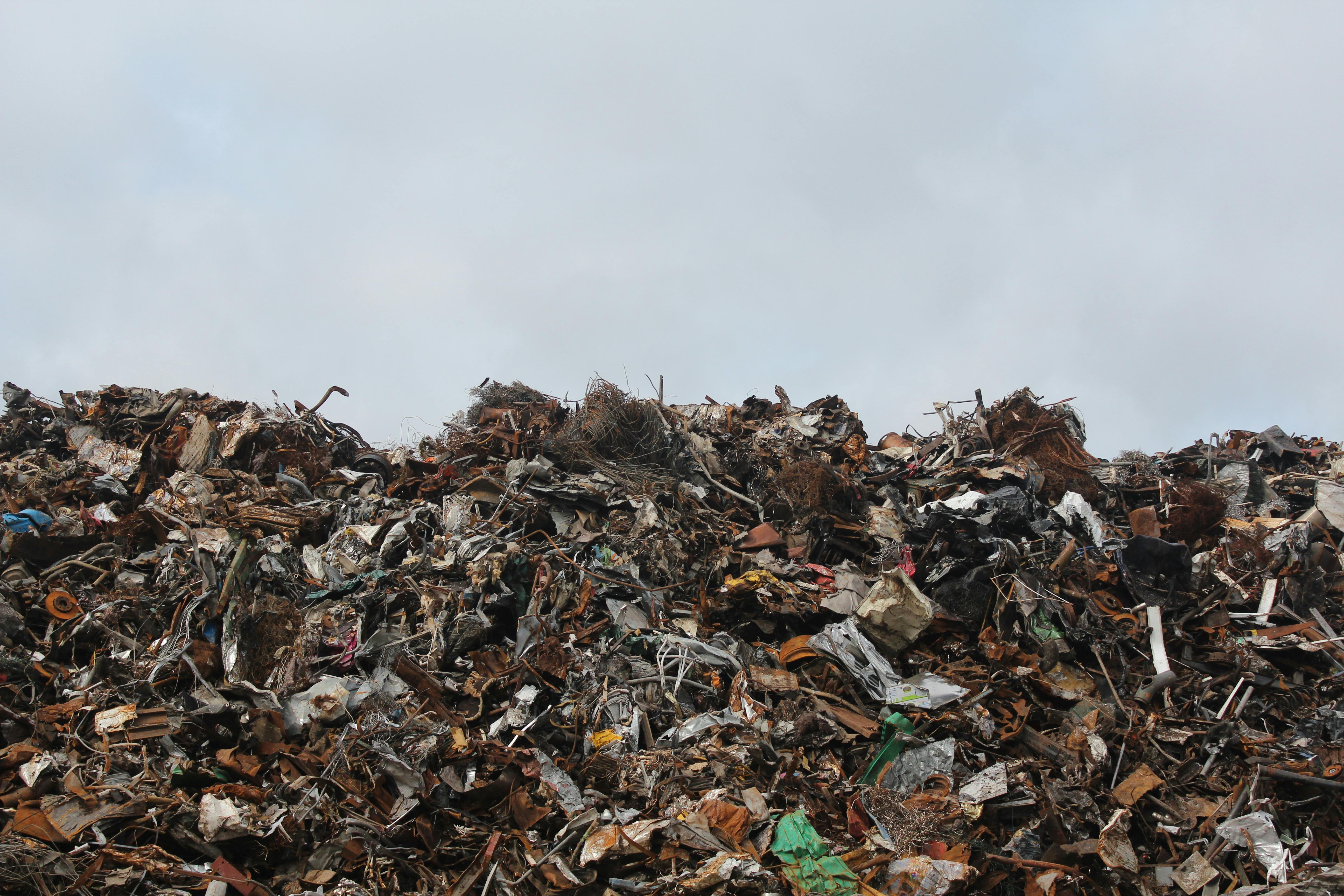
Seeing as certain people in society today try to disclaim the impact that we as humans have on the environment in general, I wanted to bring this issue to the forefront and demonstrate ways of helping this problem by establishing my own system of composting and sharing some results of what I have found along my journey. "How does composting exactly relate to climate change?" one may ask. Well, by creating a compost system for biodegradable items, you can take out the amount of "organic waste"(or waste originating biologically) that goes into landfills and decomposes anaerobically to create the greenhouse gas methane. Not only does it help take greenhouse gases out of the atmosphere, but composting can also be used for better water retention in the soil and most obviously, for enriching gardens.
 My goal by the end of this project will be to learn more about composting (enough to share with my family and the class to encourage them to start their own compost bins), have a fully functional example that I can show to the class by the end of the semester, and be able to use the compost to possibly create a garden of some sort at home. The way that I will measure my progress for this project will be through my blog, where I will be updating anything from recent contact that I have made with with various organizations or experts, to calculations on how much greenhouse gases I have taken out of the atmosphere, to pictures that document the process of my composting journey. Moving forward, I plan to have figured out what type of compost bin I will be creating, attain the necessary materials to build it, and start building by the time I post again(approximately 2 weeks or so).
Seeing as certain people in society today try to disclaim the impact that we as humans have on the environment in general, I wanted to bring this issue to the forefront and demonstrate ways of helping this problem by establishing my own system of composting and sharing some results of what I have found along my journey. "How does composting exactly relate to climate change?" one may ask. Well, by creating a compost system for biodegradable items, you can take out the amount of "organic waste"(or waste originating biologically) that goes into landfills and decomposes anaerobically to create the greenhouse gas methane. Not only does it help take greenhouse gases out of the atmosphere, but composting can also be used for better water retention in the soil and most obviously, for enriching gardens.
My goal by the end of this project will be to learn more about composting (enough to share with my family and the class to encourage them to start their own compost bins), have a fully functional example that I can show to the class by the end of the semester, and be able to use the compost to possibly create a garden of some sort at home. The way that I will measure my progress for this project will be through my blog, where I will be updating anything from recent contact that I have made with with various organizations or experts, to calculations on how much greenhouse gases I have taken out of the atmosphere, to pictures that document the process of my composting journey. Moving forward, I plan to have figured out what type of compost bin I will be creating, attain the necessary materials to build it, and start building by the time I post again(approximately 2 weeks or so).
"The Woman With a Hole in Her Brain"
The article that we were tasked with reading, "The Woman With a Hole in Her Brain", is about a recent discovery of a woman in China who has lived without a cerebellum in her brain for 24 years, and only suffered from minor complications and defects as a result. Instead of having a cerebellum as she should at the near the base of her head, cerebral spinal fluid had filled in the gap, and she became one of 9 people to have been miraculously able to survive a entirely without their cerebellum, and to adulthood nevertheless. The uniqueness of this discovery only further shows how adaptable the brain is; despite missing over 50% of the neurons a normal person would from her lack of a cerebellum, she has still managed to survive to the age of 24 and live to tell the tale. The cerebellum is often credited with controlling voluntary movement and balance, which may explain her unsteady grasp on walking and the dizziness and nausea that sent her to the hospital, but the comparable negligence of these problems only proves how elastic the brain can be when taking over for a missing part. This relates to the transfer of functions of another organ in our body, the spleen, which when damaged or removed, can easily pass the baton of salvaging, storing, and repurposing blood to red bone marrow or the liver.
If one's parietal lobe was missing instead of their cerebellum, there would obviously be very different symptoms than the ones that the woman described in the article had. The parietal lobe of our cerebral cortex is in charge of sensations felt by the body, and controls the reactions that we have to our environment. Inside the parietal zone, there is a vital part of our brain called the somatosensory cortex, which receives sensory input from the sensory nerves located all across the body, and on the other side of it, the motor cortex outputs motor nerves to control actions taken in response to the sensory input. I highly doubt a person would be able to survive, or at least die extremely early into their lifetime, without a parietal lobe, because without the neurons of the somatosensory cortex, no sense of touch would be able to protect us from the dangers of the outside world, and the possibility of one's motor cortex(that controls how our body reacts) being damaged would also be extremely high. People without a parietal lobe would be unable to process physical feeling whatsoever, and that is something that most likely cannot be replaced or take over by one of there other lobes or parts of the brain.
If one's parietal lobe was missing instead of their cerebellum, there would obviously be very different symptoms than the ones that the woman described in the article had. The parietal lobe of our cerebral cortex is in charge of sensations felt by the body, and controls the reactions that we have to our environment. Inside the parietal zone, there is a vital part of our brain called the somatosensory cortex, which receives sensory input from the sensory nerves located all across the body, and on the other side of it, the motor cortex outputs motor nerves to control actions taken in response to the sensory input. I highly doubt a person would be able to survive, or at least die extremely early into their lifetime, without a parietal lobe, because without the neurons of the somatosensory cortex, no sense of touch would be able to protect us from the dangers of the outside world, and the possibility of one's motor cortex(that controls how our body reacts) being damaged would also be extremely high. People without a parietal lobe would be unable to process physical feeling whatsoever, and that is something that most likely cannot be replaced or take over by one of there other lobes or parts of the brain.
Thursday, February 2, 2017
Unit 5 Reflection
Themes and Essential Understandings
First, we learned about the digestive system, and our goal was to find out how the functions of the digestive system are fulfilled by the structures of the alimentary canal and accessory digestive organs. We discussed how the digestive system has 6 basic functions, which are ingestion(eating food), secretion(exuding digestive fluids), mixing, digestion(breaking the food up into little pieces), absorption(retrieving nutrients for use in the body), and lastly, defecation(getting rid of the digested food). The process that our food takes throughout the alimentary canal, starts from the mouth, where our teeth and tongue does some initial digestion. The chewed up bolus then makes its way down the pharynx, or the throat, to the esophagus, through a process called peristalsis. The bolus finally makes its way down to the stomach, where the majority of the "digestion" function is performed through physical and chemical changes; after leaving the stomach as a piece of chyme, the almost digested food reaches the organ that is the most important in the digestive system: the small intestine. Comprised of the duodenum, jejunum, and ileum, the small intestine, as we learned in the Digestive System Lab(when we physically measured out the length of our GI tract), is the longest part of the GI tract, which is probably why it takes the longest to pass out of it and into the large intestine. Some accessory organs to assist the small intestine are the liver, which produces bile for large fats; the gallbladder, for storing bile for the liver; and the pancreas, which produces enzymes. The large intestine finishes the job when chyme passes through the ascending colon, transverse colon, descending colon, and finally the rectum.
The next thing we learned in class was about the processes of fuel metabolism, and we were tasked with understanding how the body uses certain molecules and biological pathways to meet its energy needs. The first thing that we learned about was how certain types of food have different uses for our body, and this was shown through a diagram on our notes:

Our next section was diabetes, labeled as the result of dysfunction in the metabolic system. GLUT-4 is the transporter integral to the effectiveness of insulin, as it pretty much move to allow glucose to enter a cell when insulin is present, or when people exercise. There are 2 types of diabetes: Type 1 diabetes, when somebody is unable to produce insulin in their pancreas for glucose storage and must take insulin as a shot; and Type 2 diabetes, when people are able to produce insulin but are not receptive to it as they should be. Insulin resistance is what it is called when people are unable to respond to the signals of insulin, and it is theorized to happen due to excess fatty acids "blocking" GLUT-4 transporters, or the hormone resistin that prevents the binding of insulin.
 |
| OpenStax College. The Endocrine System. Digital image. Wikimedia Commons. N.p., 19 June 2013. Web. 2 Feb. 2017. |
The endocrine system is in charge of controlling the equilibrium in the physical aspects of the body, through the secretion of hormones in a negative feedback system(when specific hormones are secreted to fit certain situations). Firstly, steroid hormones are lipid solube hormones that can go through the cell membrane to meet receptors inside the cell and to activate certain genes in a cell's DNA. Nonsteroid hormones, which are not lipid soluble, are unable to pass through the cell membrane, and meet receptors on the cell's surface to trigger an enzyme reaction. Glands involved in the endocrine system include the pituitary gland, posterior lobe, anterior lobe, thyroid gland, parathyroid glands, adrenal medulla, adrenal cortex, pancreas, gonads, an the kidneys.
Last but not least, the lymphatic system works mainly to maintain immunity, absorb lipids, and recover fluids from destroyed cells in the tissues. The "blood" of the lymphatic system is a clear fluid called lymph, and much like the cardiovascular system(a review of which can be found in my Unit 3 Reflection, lymph flows through lymphatic vessels and lymphatic capillaries; however, the lymphatic system does not require arteries, because lymph vessels flow both ways, and instead of going to a "heart", the lymph flows into lymph nodes. Lymph flows through rhythmic contractions, muscle pumps, a thoracic pump, and absorbing bloodstreams, depending on where it is in the body; along with lymph itself, lymphocytes, which are types of white blood cells, are also crucial to the lymphatic system. The thymus is where T cells mainly develop after being produced in red bone marrow, while the spleen holds both "red pulp"(sinusoids containing red blood cells), or "white pulp"(lymphocytes and macrophages).
Strengths/Weaknesses/New Year Goals
This unit, some of my strengths were understanding the digestive system, fuel metabolism, and diabetes units pretty solidly in time for the temp check that we had in class, which I felt was due to keeping up with my New Year Goal of learning how I best study and taking more thoughtful, engaged notes. By running over what was to be tested with a few of my friends before the temp check, I was able to score much higher than I would have without the extra effort of studying that I invested. As I listed in my action plan, I first drew up a list of the things I thought were most important in the notes, and then repeatedly reviewed concepts I hadn't yet understood, and I think that definitely helped me improve the organization of what I knew and didn't know yet. My other New Years Goal also tied in with the topic of studying and working in a timely manner, and I do think I slipped a bit midway through this month and unfortunately started to revert back to my procrastinating ways. I have been getting better with wasting copies amounts of time before doing homework, and that is probably due to the fact that I downloaded a website blocker to curb my procrastination on the computer; however, the attraction of my phone has compromised the success of my mission, which will be something that I address in the coming month. I would say that some of my other weaknesses during this unit would be my comprehension of the endocrine system, especially the individual functions of the different glands; before the test, I will focus my attention on this aspect of the unit.
Things that I am still curious about after ending this unit would be exactly when being an American, living in a "developed" country, increased your risk of contracting diabetes or obesity, and whether other countries which are similarly "developed" and yet don't have as much of a risk of this epidemic are dependent solely on their genetics to attribute their lack of diabetes to. I became intrigued about this topic more so after the reading "Does Your Metabolism Need an Overhaul" by Joseph Hooper for homework, which discussed the misgivings of the American diet and lack of exercise.
Wednesday, January 18, 2017
Digestive System Lab
For this lab, we measured different lengths of string to represent the length of the digestive tract and all of its organs; from this, we were able to see a physical representation of the journey that our food has to take while being digested before it is excreted.
 The main thing that I realized while doing this lab was just how long the small intestine is, because given that it is always depicted as a curled up lump of an organ, I hadn't realized how tightly wound our small intestines are. After seeing the length of my small intestine in person, I came to the conclusion that the length of this organ would make sense, considering that the small intestine is the organ most vital to taking nutrients out of our food, and absorbs the most nutrients(longer organ=longer time to process food). Along with the surprising length of my small intestine, I was intrigued by the seemingly far-fetched lengths of string that represented the esophagus, mouth, stomach, and large intestine. After adding up all of the lengths, I got a total length of 913.5 cm, or 9.135 m.

The length of my digestive system is more than 5 times my height, which is quite a substantial amount, so the only way that it could truly fit would be to curl and twist around itself multiple times(i.e. the small intestine) or sit slightly angled inside my body(i.e. the stomach).
I think it takes on average about a day or so for food to move through my entire digestive system. Food is not immediately digested and then excreted before the next meal, so I think this is a reasonable guess. My guess was in fact way off; food travels through your stomach and small intestine withing a matter of 6-8 hours, but passing through the large intestine adds another 40 or so hours to the digestion time, making the average digestion time among all people more or less 53 hours. I think the chyme takes so long to pass through the large intestine because the large intestine is responsible for retaining or excreting a specific amount of water based on factors like your hydration or general well being, and therefore must determine how little or much water to extract from the chyme in accordance to the body's current condition.
Digestion is different from absorption in that digestion is the process of breaking down foods, while absorption is the process of extracting nutrients from various foods. The mouth, esophagus, and stomach are most responsible for digestion, while the small intestine and large intestine are responsible for absorption.
Some things I am curious about concerning the digestive system is the relative time it takes to digest different foods in comparison to others, as well as how much energy it takes to digest a typical meal(i.e. how many calories you can burn just by digesting).
Monday, January 9, 2017
New Year Goals
The goal that I have for this class specifically this semester is to work on finding the best way to study for the tests that I have in this class. Last semester, we took a VARK questionnaire to find out how we study the best, and I found that aural, or listening, was in fact the best way that I studied; however, I will endeavor to find additional, more specific tactics to study for this class, and try new studying techniques that I may later apply to other classes in the future. My action plan for this goal will be first to keep track of/underline/highlight important terms and things that will for sure be on the test during class, when we take notes for the first time. Next, I will review my notes when the test date approaches by picking out certain terms or concepts that I don't understand or remember and take notes on those specific terms. Then, I will enlist in the help of a peer to go over the list of those terms that I didn't understand previously, and highlight the terms that I still feel are not as solid in my mind yet. The remaining terms will be far less in number than the first list of terms that I wrote down, and by focusing on those problem areas before the test in addition to browsing over the topics I covered before, I will be able to achieve greater success in my studying for this class.
The goal that I have in general spanning the entire semester would be cutting down on the amount of time that I spend procrastinating. In general, this year has probably been the worst for me in terms of procrastinating, and I feel that my sleep, stress levels, and maybe even a part of my grades have been suffering because of it. The action plan that I will set for this particular goal would be to first cut down the time between getting home and starting my homework to 30 minutes, because I have found that the longer that I spend not doing homework, the less that I want to start it. Then, when starting my homework, I will make sure to keep a glass of water next to me to keep me hydrated and focused when doing my work. To cut down on potential distractions, I will make sure to keep my phone away from me while doing homework by giving it to my sister to safe keep; additionally, if I have to do any homework on the computer, I will try to find website blockers to keep me from being distracted when I don't feel as motivated to do work.
Subscribe to:
Posts (Atom)