Tuesday, November 8, 2016

Unit 3 Reflection

Themes and Essential Understandings


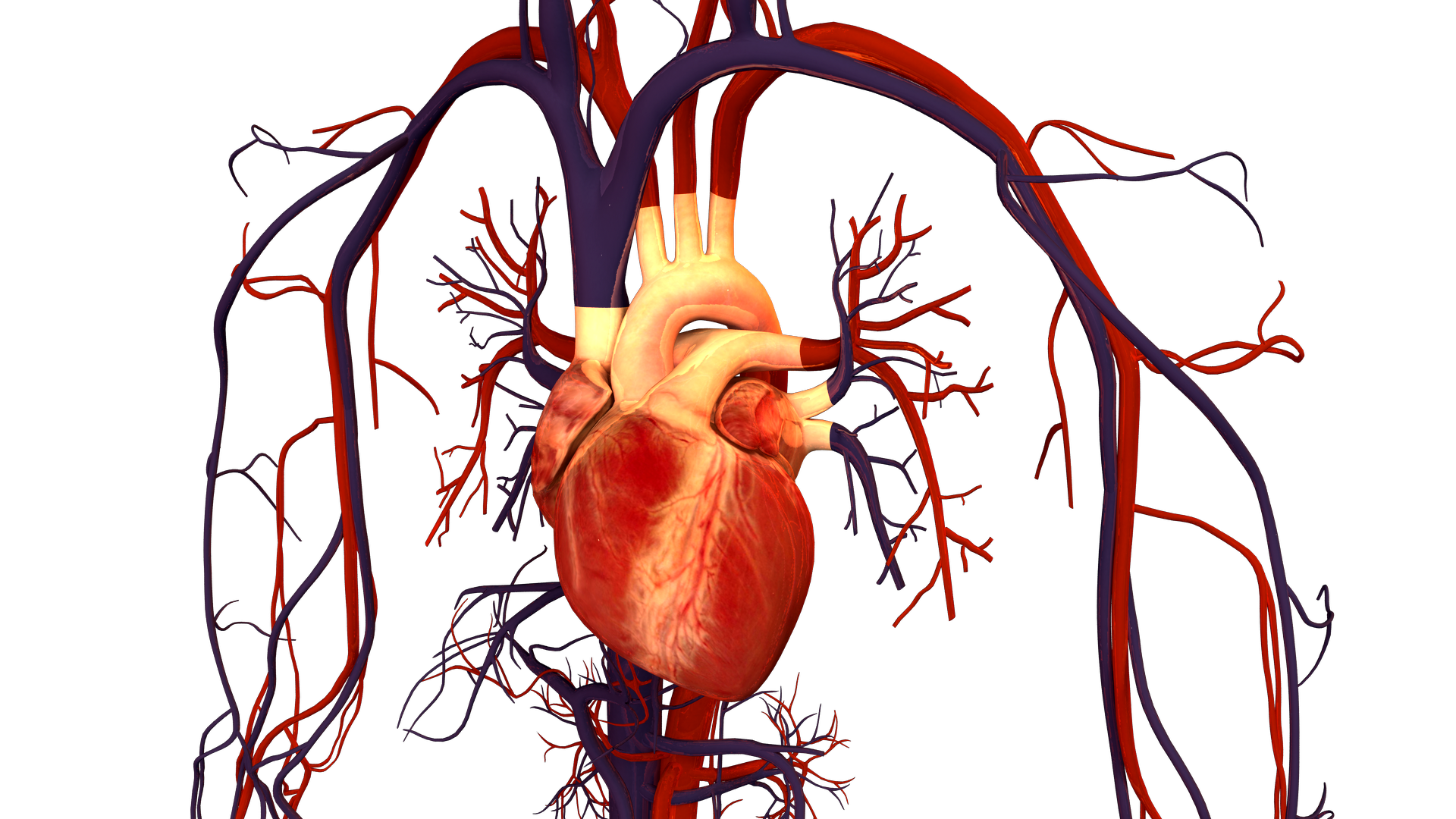
This unit is basically about the importance of cardiovascular health, and aspects of its parts that help it carry out its various functions. The cardiovascular system first starts off with the heart, which pumps blood throughout the body to transport oxygen. Entering through the superior and inferior vena cava to pass through the right atrium and tricuspid valve to the right ventricle, deoxygenated blood makes its way finally out of the heart through the pulmonary artery to the lungs to pick up more  oxygen. On its way back to the parts of the body that need it, the reinvigorated blood travels from the pulmonary veins to the left atria, and passes through the bicuspid valve to go into the left ventricle, where it then exits through the aortic valve and aorta to go to other places in the body.
Brandenburg, Bryan. Human Heart and Circulatory System. Digital image. Wikipedia. N.p., 18 Jan. 2013. Web. 8 Nov. 2016.
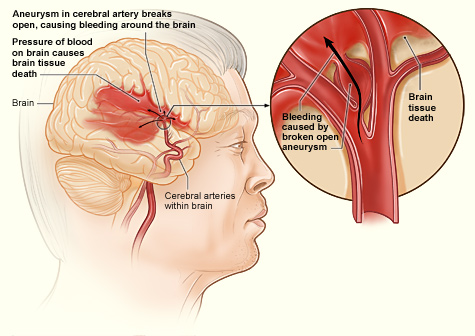
A related system is the respiratory system, where air enters through the nose and mouth to travel down to the lungs, where the bronchus branches out into various bronchioles that later transition into being alveoli that exchanges carbon dioxide with oxygen. Cardiovascular health is the ability for the heart and blood vessels to work efficiently in transporting needed materials, so that the body's processes of consuming oxygen and defending against foreign invaders are not inhibited. Heart disease and stroke are often caused by unhealthy diets with too much sodium and unrestricted carbohydrates and alcohol, as well as a lack of exercise and obesity.
National Heart Lung and Blood Institute. Stroke Hemorrhagic. Digital image. Wikipedia. N.p., 12 Nov. 2013. Web. 8 Nov. 2016.
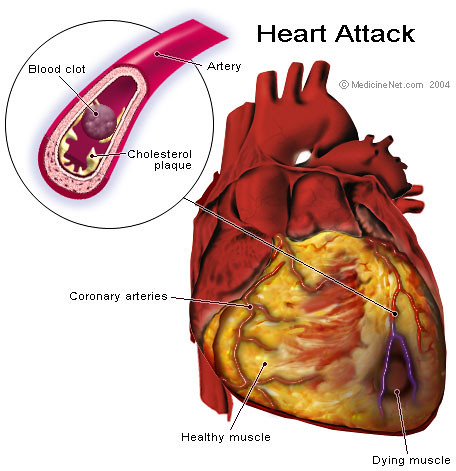
Gandhi, Ravindra. Heart Attack Anatomy. Digital image. Flickr. N.p., 11 May 2007. Web. 8 Nov. 2016.
Atherosclerosis, which is the depositing of plaque on the walls of blood vessels, is a precursor to both strokes and heart attacks and strokes, and is often caused by the ingestion of too much LDL and not enough HDL. This can cause problems when the plaque inside blood vessels blocks blood flow, or breaks off and gets stuck faster down the vessel where it is thinner. To promote my own cardiovascular health, I could exercise more each day, as well as eating foods richer in HDL and cutting down on my LDL intake. Additionally, I could check if there is a history of heart disease within my family, to be more aware of the risks that I could have. I wish to learn more about why men and older people are more likely to have high blood pressure, and whether that is due to anatomical differences or just the general lifestyles of that demographic.

Strengths/Weaknesses


During this unit, some of my strengths were being more responsible when doing homework and being able to say that I did my best work when it was being checked off. Again, however, I was not as diligent with my studying and was unable to properly space out my studying, so this will definitely be a point of focus for me for the rest of the semester. I think in terms of working with others, I definitely was able to gain a lot more insight into certain ideas, as well as absorbing the enthusiasm and knowledge of some of my group mates. One thing that I am still unsure about is the specific functions of the different white blood cells, as well as the specific functions and workings of the parasympathetic and sympathetic systems.

Monday, November 7, 2016

Heart Dissection Lab

1. The purpose of the pericardium is to protect the heart and surround it in a tight wrapping to prevent it from possibly tearing apart from the force of its beating. It also lubricates the outside of the heart to prevent friction.
2. Arteries seem to be substantially thicker and have ridges on the inside, whereas veins are smooth on the inside and much thinner.
3. The auricles serves as extensions of the atria to allow for more blood to fill the heart. Being that they feel very elastic when stretched, it probably expands to let much more blood in than would regularly enter the atrium.
4. The exterior appearance of the ventricles, at first sight, seem to be a darker tissue as compared to the atria. The atria also are packed with much more visceral fat than the ventricles.
5. The exit of the coronary sinus can be seen on the posterior side of the heart, and unfortunately was blocked to the eye by the massive amount of fat covering the area of the right atria.
The posterior view of the heart
The exit from the inferior vena cava was also cut off from our heart, but would have been located at the end of the extension of the superior vena cava.
The right atrioventricular valve, or the tricuspid valve is white in color, and has branches connecting it to the papillary muscles, which are presumably the chordae tendinae.
6. The tricuspid valve looks as such:
7. The anchoring of the heart valves by the chordae tendinae and the papillary muscle are important to heart function because it prevents the valve from caving in on itself, and allowing backflow of the blood to happen.
8. The white chordae tendinae can be seen, and there are ridges inside of the auricle. The endocardium of the left atrium is shiny and pale as compare to the myocardium that we cut into.
Cut inside the pulmonary vein
9. The function of the semi-lunar valves are to prevent artery blood from re-entering the heart.
10a. This might happen because that is where the inferior vena cava is, and backflow in that area might send unnecessary blood back to where it was coming from, which is the lower half of the body.
b. You might expect to see complications such as shortness of breath if valve disease occurs in the left side of the body, because the pulmonary veins and the pulmonary artery are located in that general area; lack of efficiency in these parts of the heart means that pathway of deoxygenated blood to the lungs as well as the oxygenated blood from the lungs is impaired as well, causing both the heart and the lungs to work harder.
11.The chordae tendinae look like cartilage, and the papillary muscle as expected creates a thicker amount of tissue to cut through. 
Cut into the aorta
12. The left side of the heart is much more spacious and also meatier in the myocardium surrounding the atria as compared to the right side of the heart, most likely because there needs to be more muscle to pump blood throughout the body as compared to just the heart.
13. On the right side of the heart, we can see the right ventricle, and on the left side, the left left ventricle. The interventricular septum and atrioventricular septum separate the two chambers as the meaty barrier in between. The epicardium layer is the outermost layer, with the myocardium being the reddish flesh in the middle, and the endocardium lining the inside of the 2 ventricles that can be seen in the photo. Other features are labeled on the photo.

Heart Video:
Extra Credit:

Thursday, October 27, 2016

Mid-Unit Summary

Throughout this unit concerning the circulatory system and the heart, we have been learning about the functions of the circulatory system, key organs and parts of the body used in the system, and how the system looks like in dysfunction and proper function. The first thing that we covered was a general overview on the parts of the heart and how blood goes through it. The heart has four chambers(the right/left atria, and the right/left ventricles), and the tricuspid and biscuspid valves lay between atria and ventricles, while the semilunar valves are located where the ventricles meet the pulmonary artery or aorta. 
A simple diagram of the heart
As for the transportation of blood, the deoxygenated blood first travels through the right atrium and right ventricle(passing through the tricuspid valve) before reaching the lungs to pick up more oxygen. The newly reoxygenated blood is then sent back to the heart through the left atrium and left ventricle(on its way past the bicuspid valve) to be sent throughout the body to be used. Electrical signals from the heart's nodal system motivate the heart to pump. Other parts of the circulatory system include the pulmonary arteries, pulmonary veins, aortic arch/trunk, common carotid artery, renal vein and artery, and mesentric arteries which connect the lungs, brain, kidneys, heart, small intestine, and large intestine to each other.
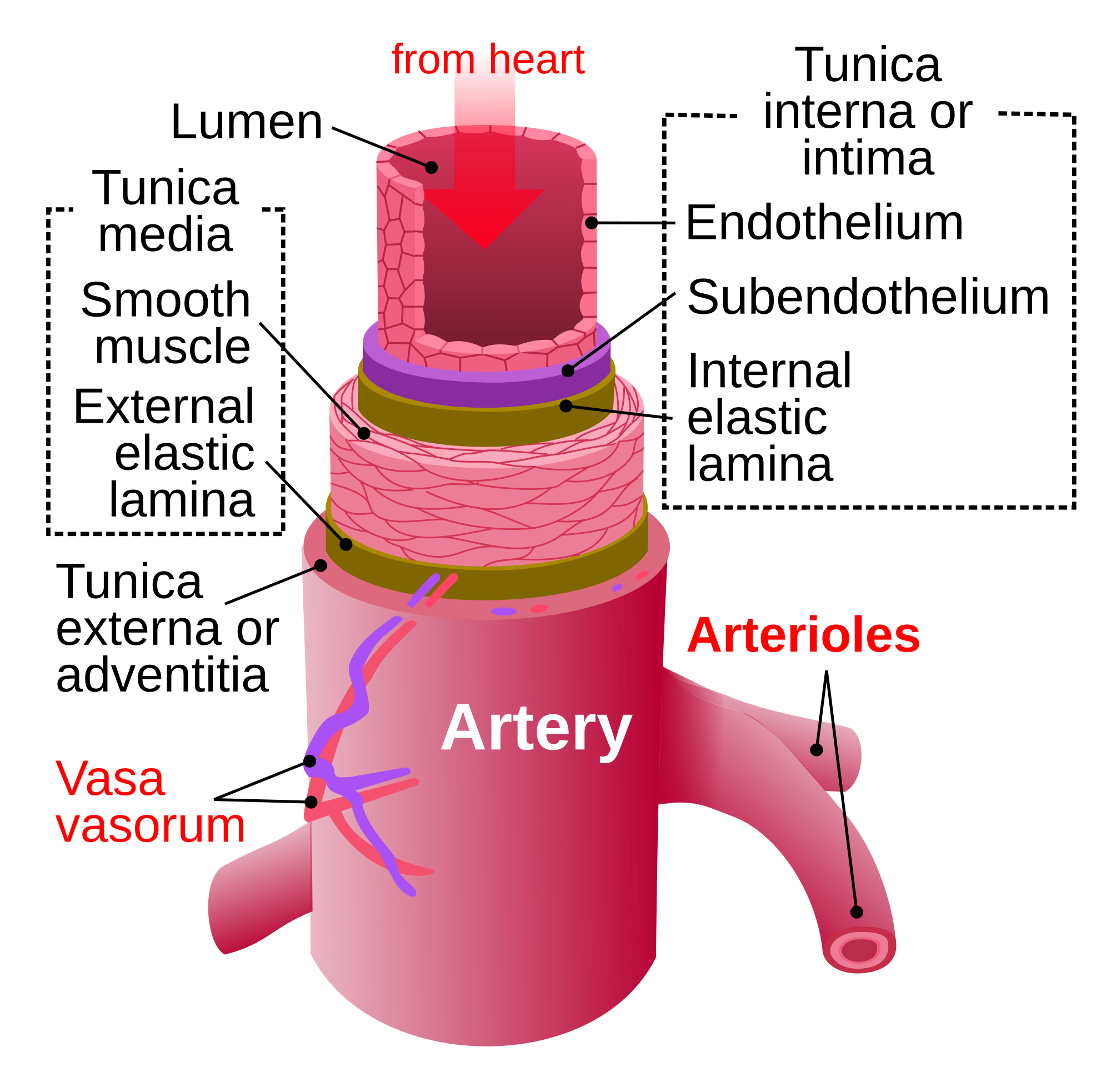
Blood vessels are another aspect of the circulatory system, and can be divided into the general terms of arteries, which carry blood away from the heart, and veins, which carry blood to the heart. Veins have one-way valves and store most of the blood volume in the body due to their thinner walls, while arteries are more elastic and contractile to force blood to the areas that need it.

Knowing the general anatomy and physiology of not just blood vessels, but the body in general, we can determine why something is not working in the proper way. Atherosclerosis, as seen from the reading, has the myth of being just clogged particles of fat, but in actuality is much more complicated than that, consisting of a plaque made up of our own inflammatory response entangled with lipoproteins(transporting LDL cholesterol throughout the body) that get stuck in the layers of the arterial wall. Inflammation, which may seem helpful when used for certain functions of the body, in this case is hugely detrimental to our health, illustrating how the natural processes of our body can work against us at times. Aneurysms, on the other hand, which can be just as problematic as atherosclerosis, are the excessive stretching of blood vessels to the point where the walls of those vessels become fragile, even to the point of bursting.
Inside blood vessels, blood, which is composed of cells and plasma, flows. There are three main types of blood cells: red blood cells, white blood cells, and platelets, which all have their own purposes in fighting infections and transporting needed nutrients. Diseases such as leukemia, HIV/AIDs, and sickle cell anemia are all examples of dysfunction in the blood, demonstrating how important upkeep of our health is in preventing these diseases.
If there is something wrong with any any aspect of the circulatory system, that tends to lead up to having cardiovascular disease, which could be anything from a heart attack to a stroke. Heart attacks and strokes are often a result of atherosclerosis, which as mentioned before, starts with the consumption of too many foods rich in LDL, often referred to as "bad", cholesterol. Heart attacks are when the supply of blood to the myocardium becomes impaired to the point of killing off cells, and strokes are when the supply of blood to the brain gets cut off. With the risks of heart attacks including cardiac arrest, and strokes being permanent damage to mobility and self-sufficiency, people should be more motivated to prevent situations from ever reaching that point. As the reading "A Strike Against Stroke" points out, stroke should not be something that people should wait for to happen; choices like exercising more, consuming healthier fats rich in HDL as opposed to LDL, and decreasing the intakes of both sodium and alcohol can and will help with lowering the chances of getting a stroke, and people should choose to make these choices before it's too late.
Works Cited
Ma, Kelvin. Artery. Digital image. Wikipedia. Wikimedia Foundation Inc., 13 Aug. 2016. Web. 27 Oct. 2016.
Ma, Kelvin. Vein. Digital image. Wikipedia. Wikimedia Foundation Inc., 6 Oct. 2016. Web. 27 Oct. 2016.

Friday, October 21, 2016

Blood Pressure Lab

1. The systole is what produces the "lub" sound when listing to one's heartbeat, and are caused by the opening of the aortic and pulmonary valves, and the closing of the tricuspid and bicuspid valves. On the other hand, diastole is when the opposite happens, when the semilunar valves close and the atrioventricular valves open. Thus, systolic pressure is the pressure when the ventricles contract and diastolic pressure is the lowest pressure in the arteries before the next contraction of the ventricles.

2. Heart rate is measured by either one's hand or a stethoscope. You measure blood pressure by using a stethoscope with a sphymomanometer.

3. Using your thumb to measure pulse may mess up the counting of the other person's pulse, because it emits a pulse as well.

4. First, secure the sphymomanometer to the patient's arm. Stick the end of the stethocope underneath the band, slightly above the elbow, and make sure that the pump is securely closed before pumping the sphymomanometer until the pressure reaches about 150. Then, slowly twist the screw on the pump until air is being let out slowly, and take notice of the number at which you can hear the heartbeat, which is the systolic pressure. The second number you should include would be when you can no longer hear the heart beating is the diastolic pressure.

Tuesday, October 18, 2016

Heart Chalk Walk

For this assignment, we were tasked with drawing a human heart out of chalk in the hallways. We then walked through the heart, listing out the specific route that blood takes when it travels through the heart and body, as shown by the video below. Deoxygenated blood first enters through the superior and inferior vena cava, coming from the body where the oxygen was last dropped off. These veins lead right into the right atrium, and then pass through the tricuspid valve to get to the right ventricle. The right ventricle then pumps blood back out through the pulmonary valve into the pulmonary artery, where the blood is sent immediately to the lungs to pluck up more oxygen. The newly oxygenated blood then travels from the lung to the pulmonary veins, which opens up to the left atrium. Oxygenated blood is pumped through the bicuspid valve to the left ventricle, where it is then pumped out through aortic valve and aorta to reach parts of the body where oxygen is necessary. The cycle then repeats itself over and over again, picking up and dropping oxygen throughout the body. 

Monday, October 10, 2016

Unit 2 Reflection

Themes and Essential Understandings

FAIL. Digital image. Flickr. Yahoo, 17 Oct. 2009. Web. 10 Oct. 2016.
Health is the culmination of a person's nutrition, exercise, sleep, stress, and social habits, which all collaborate to determine that person's overall level of wellness. In terms of my own health, I feel that I am definitely not reaching my highest potential, and a number of things can be done to improve my general health. The people at SHS, students especially, are also not the healthiest, due to the massive amount of stress that I know that people feel concerning grades and the subsequent lack of sleep that students are resorted to adopting in order to do all the things they want to. Things that could be done to promote healthier lifestyles of the people on campus would be reducing stress given to students by giving out less "busywork" to do at home and providing time before tests or at the beginning of class for students to meditate and relax before doing whatever they need to do. The essential takeaways from this unit were that good health is entirely dependent on the care that a person has in ensuring that their nutrition, sleep, stress levels, exercise, and social interactions are sufficient/in balance, and that a deficiency in any of these categories could lead to a worse quality of life. Overall, things that I gleaned from this unit were the importance of maintaining the 5 Pillars of Health, and the consequences that one can face when some of the needs for each category aren't met. For example, a key to regulating nutrition is incorporating enough varied nutrients in one's diet, whilst still keeping in check the excess consumption of nutrients such as carbohydrates, which could eventually lead to insulin resistance and even diabetes.

Falcon Market
Nutritional Analysis
 Some things that I think I still do not fully understand after this unit are the final calculations of the Nutrition Analysis; somehow the numbers that I calculated for how many calories that I should be eating per day did not match up with the numbers I calculated for the Falcon Market.
In the next unit, I hope to not only try and be more active and regular in my studying, so that studying for the unit test isn't put off until the last moment, but also to to apply things that I have learned in this unit to any topics that we may learn about in the future.

Being a chiropractor was one occupation that I could find relating to this unit. The job description entails     using specific techniques to stimulate spinal movement and improve certain bodily functions without the use of drugs; however, the reason why I chose to relate this career to our unit is that it not only focuses on the physiology of the body, but also apparently the dietary/nutritional aspects of health. 

After the conclusion of this unit, the entire class filled out a Goals Sheet for health as a basis for what we want to accomplish in terms of bettering our health individually.

Wednesday, October 5, 2016

Sleep Diary

From this Sleep Diary assignment, I was able to discern much more than the average times that I woke up an slept at. After recording several pieces of data for 6 days(we started on a Wednesday) I calculated averages for how much I slept at night, how many times that I woke up at night, number of caffeinated beverages I had throughout the week as well, and the results surprised me. On average, I had about 8 hours of sleep throughout the week, which was more than I was expecting; I usually went to bed at 12:15, no matter what part of the week it was, and woke up at 8:00 on average, considering that I had a few free firsts on school days. As I expected, on typical schools days where I had only slept for 7 hours or less, my overall energy levels were slow to reach peak alertness, and crashed much sooner than on days such as Saturday, where the added hours to my sleep schedule kept me wide awake into times when I would have been way drowsier otherwise. Seeing the effects of my sleep on my overall productivity and ability to concentrate has helped convince me of the extreme importance that sleep has on our health. Even a few hours missing from my sleep schedule, which I previously through nothing of, really affected me more than I thought in terms of sleepiness during the day, and led to me having to take short naps during the day when I could have been doing more productive things such as homework.